Logseq ist das Notizbuch, das du selbst schreibst; Pith ist das zitierte Wiki, das dein Lesen für dich schreibt.
Pith und Logseq sind beide hervorragende Werkzeuge zum Denken, aber sie stehen an entgegengesetzten Enden des Wissensspektrums. Logseq ist ein local-first, open-source Outliner: Markdown-Dateien auf deiner eigenen Festplatte, tägliche Journals, bidirektionale Links und eine bewusste Schreibpraxis, die du Block für Block aufbaust. Pith ist ein gehostetes reading memory: Du legst ein Bookmark auf das an, was du liest, und Pith baut daraus automatisch ein quellenbasiertes Wiki, in dem jede Aussage auf das Bookmark zurückverweist, aus dem sie stammt - mit Audio-Briefings und MCP-Zugriff obendrauf. Logseq belohnt Schreibdisziplin; Pith nimmt dir das Schreiben komplett ab. Wähle Logseq, wenn du das Handwerk des Notizenmachens liebst und Dateien willst, die dir vollständig gehören; wähle Pith, wenn du viel liest und Synthese ohne den Pflegeaufwand willst.
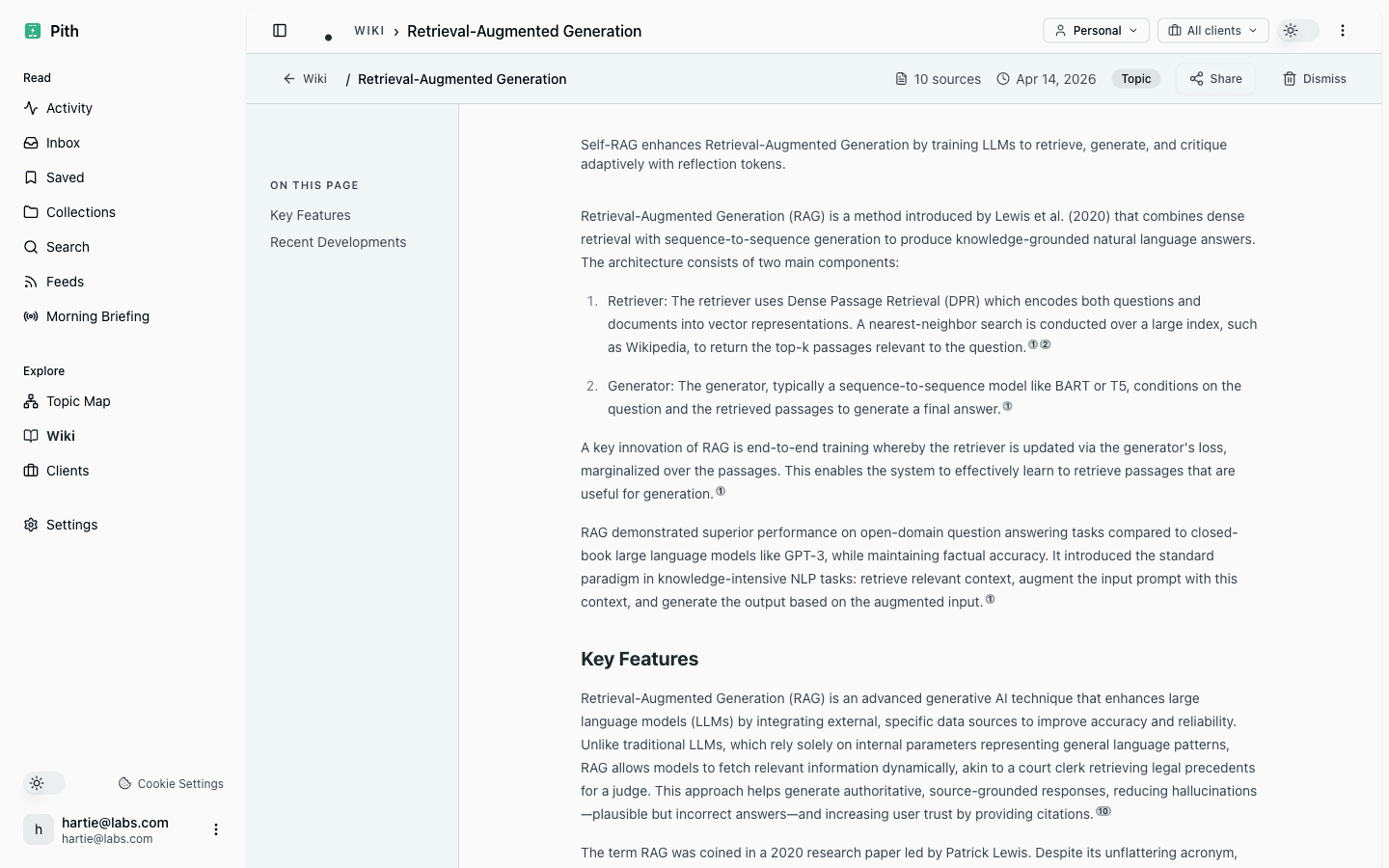
Im Direktvergleich
| Merkmal | Pith | Logseq |
|---|---|---|
| Schreibmodell | Kein Schreiben - das Wiki wird automatisch aus dem gebaut, was du liest | Manuelles Schreiben - du schreibst und strukturierst jeden Block selbst |
| Wissenseinheit | Zitierte Wiki-Seite, synthetisiert über all deine Bookmarks hinweg | Outliner-Block in täglichen Journals und Seiten |
| Verlinkung | Automatisch - Aussagen verlinken auf ihre Quell-Bookmarks | Manuelle bidirektionale Links und [[Backlinks]], die du selbst erstellst |
| Pflege | Selbstpflegend - Seiten aktualisieren sich, während du weiterliest | Du pflegst es; veraltete Notizen bleiben veraltet, bis du dich darum kümmerst |
| Speicherung | Gehostet in der Cloud (Frankfurt, Deutschland) | Lokale Markdown-/org-Dateien auf deiner eigenen Festplatte |
| Erfassung | Bookmark auf eine URL setzen; der Artikel wird für dich gelesen und synthetisiert | Manuelle Notizeingabe; Web-Clipping über Add-ons |
| AI | Eingebaute Synthese, Zusammenfassungen und Relevanz - Kern des Produkts | Optionale/Community-AI-Plugins; nicht das Kernerlebnis |
| Quellenangaben | Jede Aussage ist quellenbasiert und verlinkt auf das Ursprungs-Bookmark | Du fügst Belege manuell hinzu, wenn und wo du willst |
| Audio-Briefings | Audio- und Text-Briefings vor Kundenmeetings | Keine |
| Wissen pro Kunde | Geteilte Wissensräume pro Kunde | Du entwirfst deine eigene Ordner-/Namespace-Struktur |
| MCP-/Assistenten-Zugriff | Aus Claude und ChatGPT per MCP abfragbar | Kein natives MCP; lokale Daten, Community-Integrationen |
| Preis | Speichern kostenlos — Wiki inklusive. Bezahlt wird zum Festpreis (zitiertes Briefing 2 €, Dossier 5 €, Audio 3 €). Keine Seats, kein Abo | Kostenlos, open-source (optionales kostenpflichtiges Sync-Add-on) |
| Datenstandort | Frankfurt, Deutschland - DSGVO, kein Training mit deinen Daten | Auf deinem eigenen Gerät; der Standort ist dort, wo deine Dateien liegen |
| Am besten für | Berater, die viel lesen und zitierte Synthese ohne Pflegeaufwand wollen | Privacy-first-Denker, die die Zettelkasten-Schreibpraxis genießen |
Wann Pith gewinnt
Du liest mehr, als du schreibst
Wenn dein Tag aus 30 Recherche-Tabs besteht und du keine Geduld für Notizenpflege hast, verwandelt Pith dieses Lesen automatisch in ein zitiertes Wiki. Logseq gibt dir eine wunderschöne Leinwand, aber nur, wenn du dich hinsetzt und die Blocks schreibst - Pith verlangt nach dem Bookmark nichts mehr von dir.
Du gehst unvorbereitet in Kundenmeetings
Pith gibt dir ein Audio- oder Text-Briefing, das alles synthetisiert, was du zu einem Kunden oder Thema gelesen hast, wobei jede Aussage zu ihrer Quelle zurückverfolgbar ist. Das in Logseq nachzubauen bedeutet, vor jedem Meeting deine eigenen Notizen manuell zusammenzustellen und erneut durchzulesen.
Du willst Antworten aus Claude oder ChatGPT
Pith ist über MCP abfragbar, sodass dein Assistent quellenbasierte Antworten direkt aus deinem reading memory ziehen kann. Logseq hält dein Wissen in lokalen Dateien ohne nativen Assistenten-Zugriff, sodass es ein Werkzeug bleibt, das du öffnest, statt eines, in das deine AI hineingreifen kann.
Wo Logseq gewinnt
Wo Logseq gewinnt
Wenn Datenhoheit nicht verhandelbar ist, gewinnt Logseq klar: Deine Notizen sind reine Markdown-/org-Dateien auf deiner eigenen Festplatte, vollständig deine, ohne Anbieter dazwischen - Pith ist gehostet, du vertraust uns also deine Daten an (in Frankfurt), statt sie selbst zu halten. Logseq ist kostenlos und open-source, du kannst es also prüfen, forken und selbst hosten; Pith ist beides nicht. Es funktioniert vollständig offline, was Pith nicht tut. Und wenn du die Praxis des Schreibens wirklich schätzt - das Denken, das beim Outlining und manuellen Verlinken passiert -, ist Logseq genau dafür gebaut, während Pith sie bewusst entfernt. Das sind echte Stärken, keine Trostpreise.
FAQ
Kann Pith Logseq ersetzen?
Nur, wenn dein Ziel Synthese aus dem Lesen ist statt selbst zu schreiben. Pith baut automatisch ein zitiertes Wiki aus dem, was du als Bookmark speicherst, und nimmt dir das manuelle Notizenmachen komplett ab. Wenn du speziell einen Ort willst, um deine eigenen Gedanken von Hand zu schreiben, zu strukturieren und zu ordnen, ist Pith kein Ersatz - dafür ist Logseq da.
Ist Pith local-first?
Nein. Pith ist ein gehosteter Dienst; deine Daten liegen in unserer Cloud in Frankfurt, Deutschland. Logseq ist von Grund auf local-first und speichert Dateien auf deinem eigenen Gerät. Wenn local-first eine harte Anforderung ist, passt Logseq besser.
Ist Pith open-source?
Nein. Pith ist ein closed-source kommerzielles Produkt. Logseq ist open-source, du kannst seinen Code also lesen, prüfen, forken und selbst hosten. Wenn open-source dir wichtig ist, ist das ein echter Grund, Logseq zu wählen.
Ist Pith kostenlos?
Ja — Speichern, das automatisch gebaute zitierte Wiki und der MCP-Zugang für deine eigenen KI-Agenten sind kostenlos, mit einem Kontingent von 200 Quellen/Monat. Bezahlt wird nur, wenn Pith etwas für dich erstellt: ein zitiertes Meeting-Briefing (2 €), ein Recherche-Dossier über deinen Korpus (5 €) oder ein Audio-Briefing (3 €). Die Kern-App von Logseq ist ebenfalls kostenlos und open-source (mit optionalem kostenpflichtigem Sync-Add-on).
Wo werden meine Daten gespeichert?
Pith speichert deine Daten in Frankfurt, Deutschland, unter der DSGVO, und wir trainieren niemals Modelle mit deinen Inhalten. Bei Logseq liegen deine Daten auf deinem eigenen Gerät, der Standort ist also dort, wo du deine Dateien aufbewahrst.
Macht Pith bidirektionale Verlinkung wie Logseq?
Pith verlinkt automatisch - jede Aussage auf einer Wiki-Seite verlinkt auf das Quell-Bookmark, aus dem sie stammt -, aber es bietet keine Logseq-typischen manuellen [[Backlinks]] und Block-Referenzen, die du selbst schreibst. Die Verlinkungsphilosophien sind unterschiedlich: Pith leitet Links aus deinem Lesen ab, Logseq lässt dich sie von Hand weben.
Kann ich beides nutzen?
Ja, und viele tun das. Lass Pith dein zitiertes reading memory sein, das alles synthetisiert, was du konsumierst, und behalte Logseq als die Werkstatt, in der du in deinen eigenen Worten schreibst und denkst. Sie ergänzen einander: das eine erfasst und synthetisiert, das andere schreibt.
Gibt mir Logseq Audio-Briefings oder MCP-Zugriff?
Nein. Audio- und Text-Briefings sowie MCP-Abfragen aus Claude oder ChatGPT sind Pith-Funktionen. Logseq konzentriert sich auf lokales Outlining und Verlinken und verlässt sich für alles darüber hinaus auf Community-Plugins.
Zwingt mich Pith dazu, Notizen zu schreiben?
Nein - das ist ja gerade der Punkt. Pith verlangt bewusst kein Schreiben; das Wiki wird aus dem gebaut, was du liest. Wenn du die Disziplin und das Handwerk des Notizenschreibens willst, willst du eigentlich Logseq, das genau um diese Praxis herum gestaltet ist.
Starte kostenlos mit Pith.
Keine Kreditkarte. Vergleiche uns mit deinem echten Lese-Workflow.
Zuletzt geprüft: 5. Juni 2026 · CC BY 4.0 · frei zitierbar mit Quellenangabe zu Pith.