Pith vs Mem.ai
Pith synthetisiert Quellen. Mem reichert deine Notizen an.
Mem.ai speichert Notizen, die du schreibst. Pith speichert Artikel, die du sicherst. Mems KI reichert dein Schreiben an – automatisches Tagging, Wiederauffinden, verwandte Notizen. Piths KI synthetisiert Quellen, die du gar nicht selbst verfasst hast – Wiki-Seiten, Briefings, Belege. Der Unterschied zählt, wenn die Frage lautet 'Was weiß ich über all die Dinge, die ich gelesen habe?' und nicht 'Wo habe ich diese Idee notiert?'.
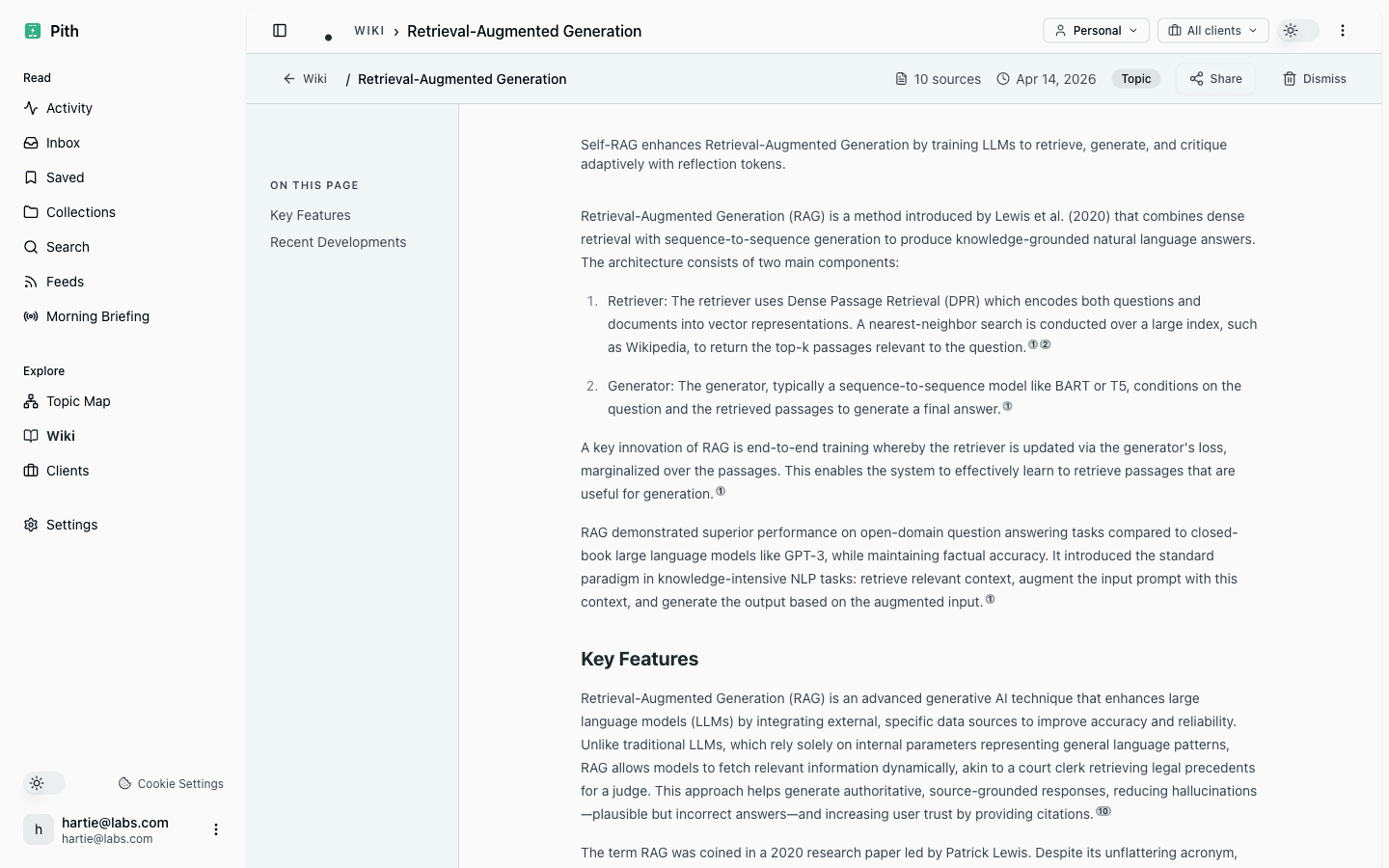
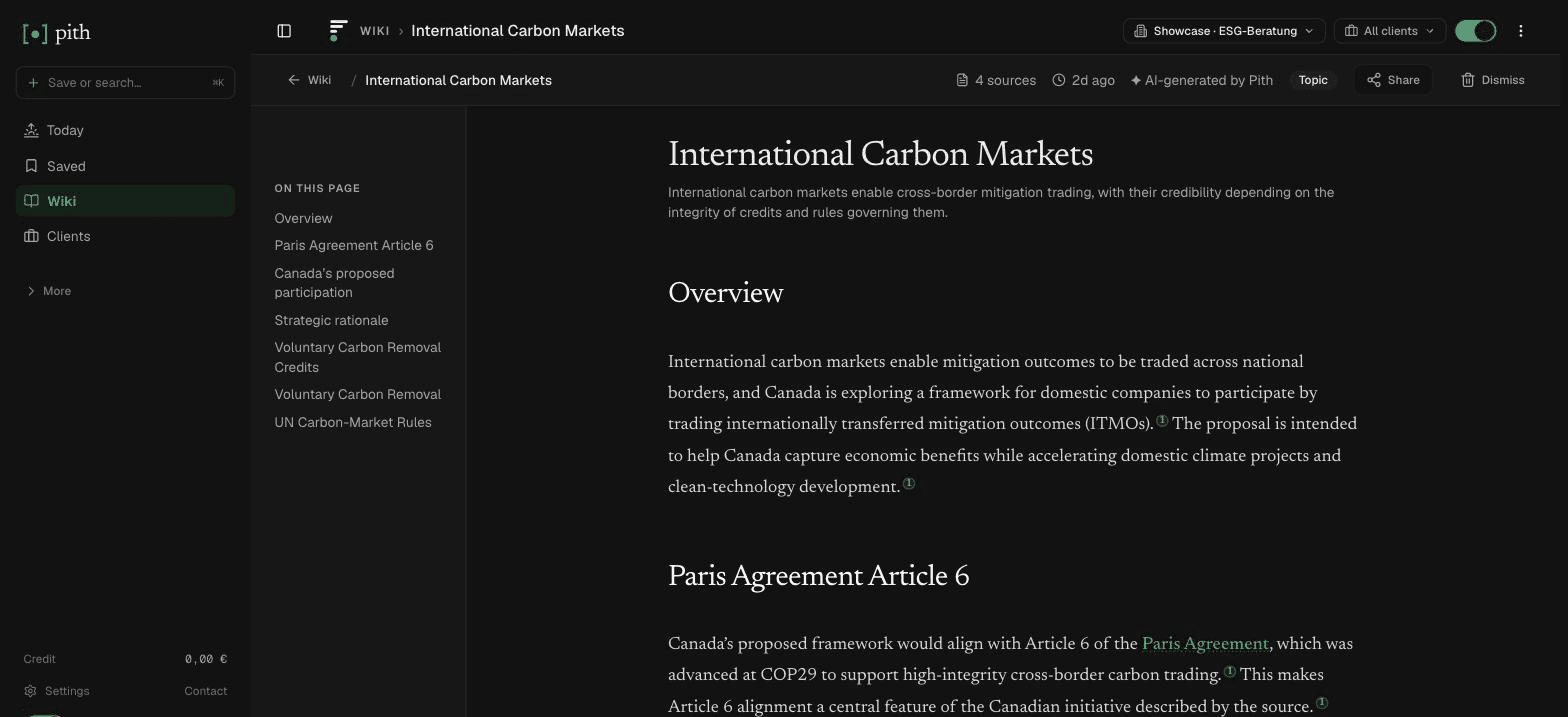
Im Direktvergleich
| Merkmal | Pith | Mem.ai |
|---|---|---|
| Primärer Input | Bookmarks (Artikel, die du liest) | Notizen (Text, den du schreibst) |
| Rolle der KI | Synthetisiert die Quellen, die du gesammelt hast | Reichert die Notizen an, die du verfasst hast |
| Wiki-Struktur | Automatisch erstellte Konzeptseiten | Frei verknüpfte Notizen |
| Beleg-Verankerung | Jeder Absatz belegt ein Bookmark | Selbst geschrieben, keine automatischen Belege |
| Browser-Extension | Nativ, Speichern per Tastendruck | Mem-Capture-Extension |
| RSS- / Feed-Aufnahme | Integriert, nach Interessen sortiert | Nicht nativ |
| Wissen pro Kunde | Erstklassiges Konzept | Tag-basiert, manuell |
| Briefings | TTS-Audio + Text pro Kunde | Tägliche Mem-It-Zusammenfassung |
| Suche | Hybrid (semantisch + Keyword) | Mem Chat / semantische Suche |
| Mobiles Bearbeiten | Mobile App auf Lesen ausgelegt | Starkes mobiles Bearbeiten |
| Offline-Notizen | Speicher-Warteschlange offline | Vollständiges Offline-Bearbeiten |
| Preismodell | Lesen kostenlos; bezahlt wird pro KI-Aktion (ab 2 ct pro Speichern) aus Prepaid-Guthaben (ab 1 ct). Keine Seats | Pro Platz, KI inklusive |
| Datenstandort | Frankfurt, Deutschland | USA (AWS) |
| Am besten geeignet für | Leseintensive Profis | Notizenschreiber, Ideensammler |
Wann Pith gewinnt
Du liest mehr, als du schreibst
Wenn deine Woche so aussieht wie '20 Artikel gelesen, 5 Notizen geschrieben', optimiert Mem die falsche Seite. Pith baut dein Wissen aus dem Gelesenen auf, nicht aus dem Geschriebenen.
Du brauchst quellenbelegte Ergebnisse
Piths Wiki-Absätze belegen das zugrunde liegende Bookmark. Ein Briefing für ein Kundenmeeting lässt sich Satz für Satz untermauern. Mems Notizen sind dein eigener Text – nur so belastbar, wie du dich daran erinnerst, was du beim Schreiben gelesen hattest.
Du betreust Kunden und willst Wissen pro Account
Piths Kunden sind erstklassige Entitäten mit automatischem Tagging, Briefings und Aktivitäts-Streams. Mem kann das mit Tags nachbilden, aber der Ablauf ist manuell: Du taggst die Notiz, du suchst nach Tag, du pflegst die Struktur.
Wo Mem.ai gewinnt
Wo Mem gewinnt
Wenn dein Hauptinput dein eigenes Denken ist – Meeting-Notizen, Ideenfragmente, Journaling, Textentwürfe – ist Mem genau dafür gebaut und Pith nicht. Mems mobiles Bearbeiten ist stark; Pith ist aufs Lesen ausgelegt. Für jemanden, dessen Wissenswerkzeug ein Notizbuch ist, passt Mem. Für jemanden, dessen Wissenswerkzeug der Artikel ist, den er im Zug gelesen hat, passt Pith.
FAQ
Ist Pith eine Notiz-App?
Nein. Pith ist ein Lese-Gedächtnis, das Bookmarks als Input nimmt. Für persönliche Notizen sind Mem, Bear oder Obsidian die bessere Wahl.
Kann ich in Pith Notizen machen?
Pith unterstützt Notizen pro Bookmark ('My take') und Highlights, aber freies Notieren ist bewusst minimal gehalten – dafür ist Pith nicht da.
Macht Mem ein automatisches Wiki wie Pith?
Mem taggt Notizen automatisch und zeigt verwandte Notizen an, generiert aber keine kanonischen Wiki-Seiten aus deinen Quellen. Eine andere Mechanik.
Kann ich meine Mem-Notizen in Pith importieren?
Es gibt keinen direkten Importer. Die Datenmodelle sind unterschiedlich (Mems Notizen sind selbst verfasster Text; Piths Wiki ist quellenbelegte Synthese). Die Brücke wäre, Mems aus dem Web gespeicherte Notizen als Bookmarks zu exportieren – aber du fährst besser, wenn du die Originalquellen direkt in Pith bookmarkst.
Ist Pith günstiger als Mem?
Die Modelle unterscheiden sich: Mem ist ein Abo pro Nutzer mit enthaltener KI. Pith hat kein Abo — Lesen ist kostenlos, bezahlt wird pro KI-Aktion aus einem Prepaid-Guthaben (2 ct für ein Speichern mit KI-Aufbereitung, 5 ct für eine Wiki-Seite, die Pith schreibt, 69 ct für ein zitiertes Briefing mit Audio). Rechne es gegen die KI-Arbeit durch, die du tatsächlich nutzt.
Wo liegen meine Daten?
In Frankfurt, Deutschland. Wir trainieren keine Modelle mit deinen Daten. Mem läuft auf AWS-Infrastruktur in den USA.
Hat Pith eine mobile App?
Piths mobiles Erlebnis ist aufs Lesen ausgelegt (Wiki durchstöbern, Briefings hören, Bookmarks markieren). Intensives mobiles Bearbeiten hat keine Priorität. Mems mobiles Bearbeiten ist deutlich stärker.
Kann ich beide nutzen?
Ja – bookmarke in Pith, schreibe Notizen in Mem. Die beiden Produkte stehen sich nicht im Weg. Die Frage ist nur, ob sich deine Wissensarbeit um das dreht, was du liest (Pith), oder um das, was du schreibst (Mem).
Starte kostenlos mit Pith.
Keine Kreditkarte. Vergleiche uns mit deinem echten Lese-Workflow.
Zuletzt geprüft: 10. Mai 2026 · CC BY 4.0 · frei zitierbar mit Quellenangabe zu Pith.