Forschende und Analysten bei der Literaturrecherche
Literaturrecherche umfasst heute mehrere Tool-Typen: KI-Suchmaschinen über akademische Korpora, Zitations-Graphen-Explorer, Paper-Zusammenfasser und quellenbasierte Synthese-Assistenten. Kein einzelnes Tool deckt alles gut ab — die meisten Forschenden kombinieren mehrere. Wir beginnen mit Pith (unser Tool, daher vorne), weil es das Synthese-und-Wiederverwendungs-Ende abdeckt, und beschreiben dann die etablierten akademischen Tools ehrlich, auch die kostenlosen, damit du den richtigen Ablauf zusammenstellst.
- 1
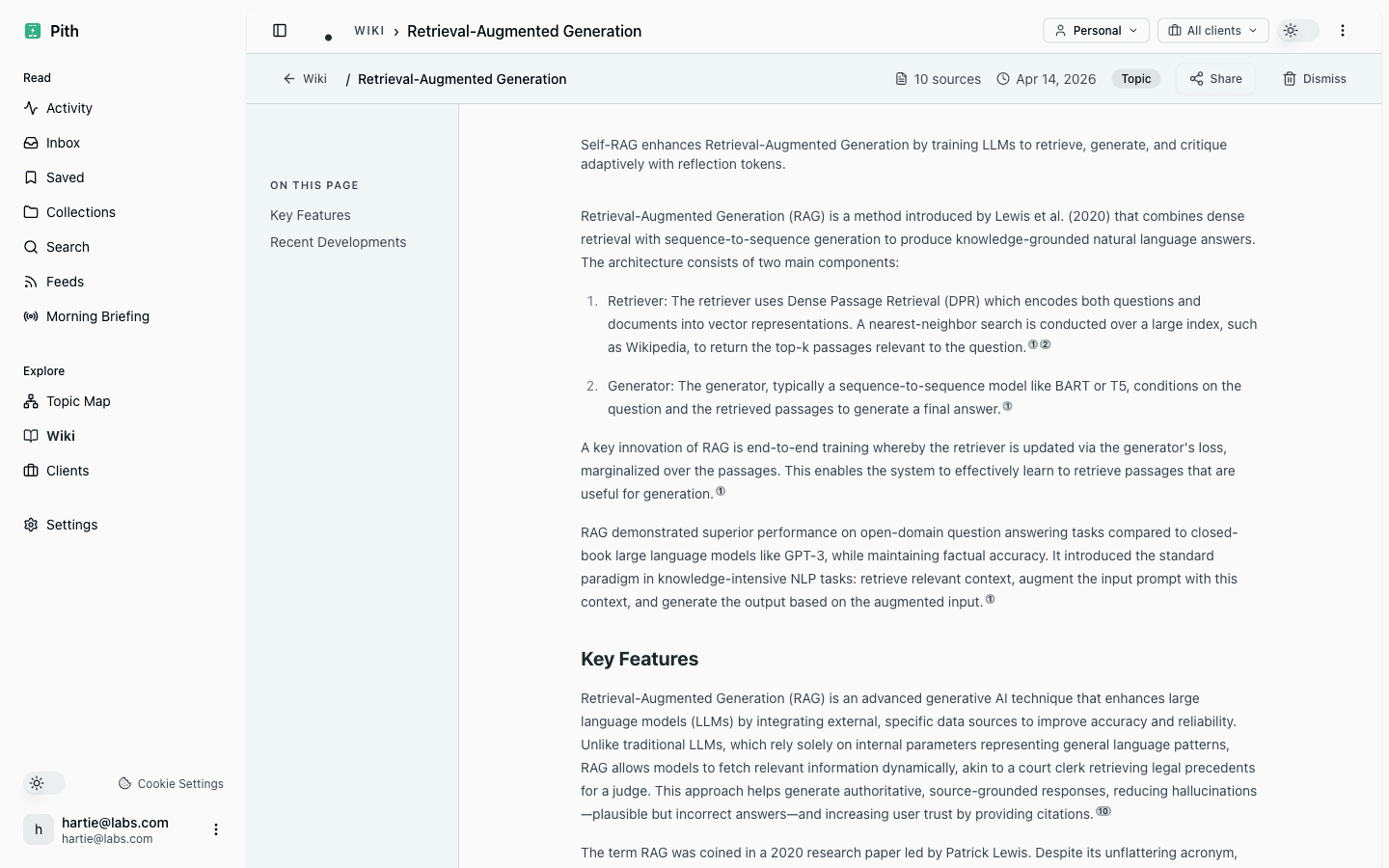
Pith
Website besuchenPith baut aus den Quellen, die du speicherst, ein zitiertes Wiki und Briefings — jede Aussage verlinkt zu ihrem Ursprung, und ein MCP-Server lässt KI-Assistenten deine Synthese direkt abfragen. Es ist EU-gehostet (Frankfurt) und richtet sich an Forschende und Analysten, die über viele Quellen lesen und Erkenntnisse pro Projekt wiederfinden und weiterverwenden müssen. Denk daran als Gedächtnis- und Synthese-Ebene, nicht als Paper-Suchmaschine.
Gut für: Bereits Gelesenes zitiert synthetisieren und wiederfinden
Es ist keine akademische Suchmaschine — es indexiert keine Paper für dich, du brauchst also weiterhin ein Discovery-Tool zum Finden von Quellen.
- 2
Elicit
Website besuchenElicit ist ein eigens entwickelter Forschungsassistent, der über 125 Mio. akademische Paper durchsucht und Erkenntnisse in strukturierte Tabellen für systematische Reviews extrahiert. Es ist stark bei Datenextraktion, Screening und Meta-Analyse-Vorbereitung, mit veröffentlichten Benchmarks zu Cochrane-Reviews. Eine großzügige Gratis-Stufe deckt Suche und Zusammenfassungen ab; der Plus-Plan ergänzt Exporte.
Gut für: Systematische Reviews und strukturierte Datenextraktion über viele Paper
Es ist auf empirisch-quantitative Literatur ausgelegt und funktioniert außerhalb gut strukturierter wissenschaftlicher Felder schlechter.
- 3
Consensus
Website besuchenConsensus ist eine KI-Suchmaschine über 200 Mio.+ begutachtete Paper, die zusammenfasst, was die Literatur zu einer fokussierten Frage tatsächlich sagt. Der „Consensus Meter“ zeigt, wie stark Studien übereinstimmen, und Deep Search erstellt strukturierte Reviews mit Visualisierungen zu Evidenzstärke und Forschungslücken. Jede Antwort ist zu zitierten Papern rückverfolgbar.
Gut für: Schnell den wissenschaftlichen Konsens zu einer konkreten Frage einschätzen
Es glänzt bei empirischen Ja/Nein-Fragen und ist schwächer bei explorativen oder theoretischen Themen, die sich nicht auf eine Aussage reduzieren lassen.
- 4
Google NotebookLM
Website besuchenNotebookLM ist ein quellenbasierter Assistent (auf Gemini-Basis), der nur aus den von dir hochgeladenen Dokumenten antwortet — mit seitengenauen Zitaten und wenig Halluzination. Das Studio-Panel verwandelt Quellen in Audio-Überblicke, Mindmaps, Briefing-Dokumente und mehr, und Deep Research kann das Web durchsuchen, um quellenbasierte Berichte zu erstellen. Hervorragend, um eine feste Sammlung von Papern zu befragen.
Gut für: Fundierte Fragen über eine kuratierte Dokumentensammlung stellen
Es arbeitet mit von dir gelieferten Quellen, statt die akademische Literatur zu durchsuchen, und ist ein von Google gehostetes Consumer-Produkt.
- 5
Scholarcy
Website besuchenScholarcy fasst Paper, Berichte und Buchkapitel in strukturierte „Flashcards“ zusammen — mit Kernkonzepten, Highlights, Methoden und Ergebnissen — und verlinkt zu Open-Access-Volltexten. Es verarbeitet PDFs, Word-Dokumente und mehr und macht dichte Paper schnell sichtbar. Günstig, mit einer begrenzten Gratis-Stufe.
Gut für: Einzelne Paper schnell sichten und überfliegen
Es ist ein Zusammenfasser pro Dokument, kein Discovery- oder paperübergreifendes Synthese-Tool, kartiert dir also kein ganzes Feld.
- 6
ResearchRabbit
Website besuchenResearchRabbit ist ein visuelles Tool zur Literatur-Entdeckung: Du gibst Ausgangs-Paper ein, und es kartiert Vorwärts-/Rückwärts-Zitate und Autorennetzwerke und empfiehlt dann verwandte Arbeiten, die sich mit wachsender Sammlung anpassen. Ideal, um Paper zu finden, die du sonst verpasst hättest, und zu sehen, wie ein Feld zusammenhängt. Sammlungen lassen sich mit Mitarbeitenden teilen.
Gut für: Verwandte Paper über Zitations- und Autorenkarten entdecken
Einst vollständig kostenlos, sperrt es nun mehrere Projekte und erweiterte Funktionen hinter einer Bezahlstufe.
- 7
Semantic Scholar
Website besuchenSemantic Scholar ist die kostenlose akademische Suchmaschine des Allen Institute for AI über 225 Mio.+ Paper — mit KI-generierten Kurzfassungen (TLDRs), Zitationskontext und Signalen zu einflussreichen Zitaten. Die offene API und die Datensätze speisen einen großen Teil des Forschungs-Tool-Ökosystems. Ein verlässlicher, kostenloser Unterbau für Discovery.
Gut für: Kostenlose, breite akademische Suche mit mächtiger offener API
Es ist ein Such- und Discovery-Index, kein Synthese-Tool — es schreibt keine Reviews und extrahiert keine strukturierten Ergebnisse für dich.
Starte kostenlos mit Pith.
Keine Kreditkarte. Verwandle dein Lesen in ein zitiertes Wiki.
Zuletzt geprüft: 7. Juni 2026 · CC BY 4.0 · frei zitierbar mit Quellenangabe zu Pith.